

Glutes workout: 5 best exercises to target the biggest muscle in the body

Glutes workout: 5 best exercises to target the biggest muscle in the body

If you’re really looking to work your glutes, you’ve probably already added squats to your workout routine. Yet not all exercises are created equal, and to really target the different parts of your glutes, you should be mixing things up (and no, we don’t mean doing a squat challenge). 

Your glutes are the biggest muscle in your body and if your goal is to really build your glutes, you’ll need to target all the different parts of the muscle. By this we mean the gluteus medius, which is the highest of the glute muscles and is responsible for hip movement, for example when you step up onto something. Next is the gluteus minimus, which sits below the gluteus medius and also supports the hip, helping with walking and rotating the legs. The gluteus maximus is the largest of the three glute muscles, and is responsible for the rotation of the hip and the lateral rotation of the thigh. The gluteus maximus is also responsible for the shape of the butt, so is often one to target if you have a more aesthetic goal. 

Of course, even if your goals aren’t to tone or build your glute muscles, keeping them strong is still important. Your glutes are responsible for powering the legs when we jump, walk, and run, so runners especially should make sure they are working on their glute strength if they are looking to PR at their next race. 

5 exercises that really target your glutes: 

Looking to target your glute muscles? Add these exercises to your workout routine. 

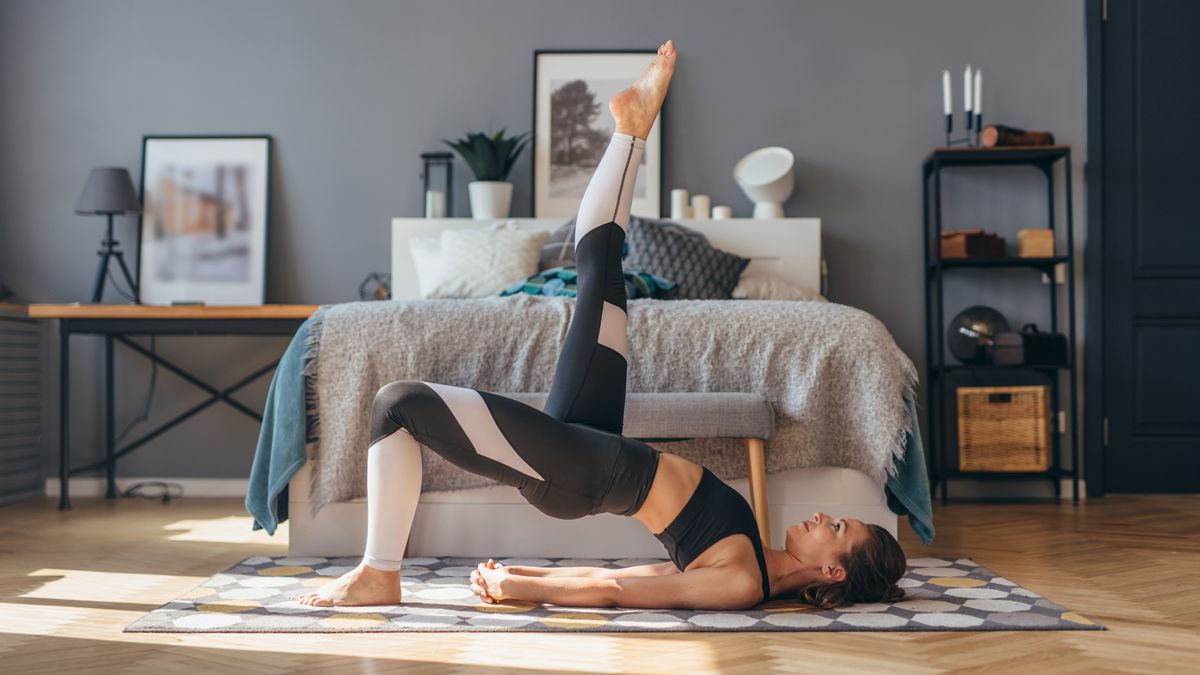
1. Glute bridges 

A simple exercise you can do with just your body weight, glute bridges target the hamstrings and the gluteus maximus, while also working the core. To do a glute bridge, lie on your back, with your knees

Read More

4 Simple Exercises for Beginners

4 Simple Exercises for Beginners
  • Calisthenics is a bodyweight-only workout that still strengthens muscles and burns calories.
  • A calisthenics workout may include exercises like squats, push-ups, and pull-ups. 
  • Incorporate calisthenics into your workouts four times a week for optimal training and recovery.
  • Visit Insider’s Health Reference library for more advice.


Calisthenics
is a great way to reach your fitness goals without needing to go to the gym or invest in much equipment. 

“It’s one of the easiest exercises for anyone to do at home without expensive equipment,” says Adam Rivadeneyra, MD, a sports medicine physician with Hoag Orthopedic Institute in Irvine, California. “Most exercises rely on body weight for resistance and can be performed in short intervals in any small space.” 

Here’s what you need to know about the benefits of calisthenics, with some example workouts for beginners. 

What is calisthenics?

Although you might not be familiar with the name, you’re probably already doing some calisthenics exercises.

“Calisthenics is a type of training that uses predominantly bodyweight training to improve our overall ‘functionality’ while getting us fit,” says celebrity trainer Jillian Michaels, creator of The Fitness App

Functional exercises are those that mimic the way we move every day, Michaels says. For example, some of the basic human functions are pushing, pulling, and jumping, and those are the types of moves you’ll do during calisthenics. 

“Exercises like push-ups, pull-ups, and squats improve everything from our strength and flexibility to our coordination, balance, and agility,” Michaels says. 

Calisthenics exercises also use your body’s own weight, with no extra weight or dumbbells required.  “Many newer workout programs like boot camps or HIIT workouts incorporate many of the classic calisthenic exercises,” Rivadeneyra says.

Benefits of calisthenics 

Calisthenics are appealing because they engage large muscle groups, which increases your calorie burn. In addition,

Read More